


What Is Bourbon? The 5 Rules That Make It Unique

Think of rich caramel, warm vanilla, and a hint of toasted oak. These are the classic flavors that make bourbon so inviting, but they don’t happen by accident. This signature taste is the direct result of a time-honored process and a specific set of legal requirements. The question of what is bourbon is really a question of how it’s made. From its corn-based recipe to its mandatory aging in brand-new, charred oak barrels, every step is designed to create its distinct flavor profile. We’ll walk you through how these rules shape the spirit in your glass, giving you a new appreciation for this American classic.
Key Takeaways
- Strict Rules Create the Classic Taste: To be called bourbon, a whiskey must follow specific American laws, including being made with at least 51% corn and aged in new, charred oak barrels. These requirements are the reason bourbon has its signature sweet and rich character.
- The Mash Bill and Barrel Define the Flavor: The specific grains used and the time spent in the barrel are the two biggest factors in a bourbon's taste. Corn provides sweetness, rye adds spice, and the charred oak barrel contributes all the color plus notes of vanilla and caramel.
- Read the Label to Choose with Confidence: Terms like "Straight," "Wheated," or "Single Barrel" aren't just marketing—they tell you about the bourbon's quality and flavor profile. Understanding them is the key to picking a bottle that suits your personal taste.
What Exactly Is Bourbon?
Let's clear up a common question right away: all bourbon is whiskey, but not all whiskey is bourbon. Think of it like this: sparkling wine can only be called Champagne if it comes from a specific region and follows certain rules. Bourbon has a similar story. It's a uniquely American spirit with a strict set of legal requirements that give it its signature character. These rules aren't just for show; they dictate everything from its sweet, full-bodied flavor to its rich amber color. Understanding what makes a bourbon a bourbon is the first step to finding a bottle you'll truly love.
A Quick Look at Its American Roots
Bourbon is as American as it gets. While it can technically be produced anywhere in the United States, its heart and soul are deeply rooted in the American South. When you think of bourbon, you almost certainly think of Kentucky, and for good reason—the state has a long and storied history with the spirit. This strong geographical identity is a huge part of its heritage, but what truly sets it apart isn't just where it's from, but how it's made. Its identity is protected by law, making it a true American original.
The Official Rules That Define Bourbon
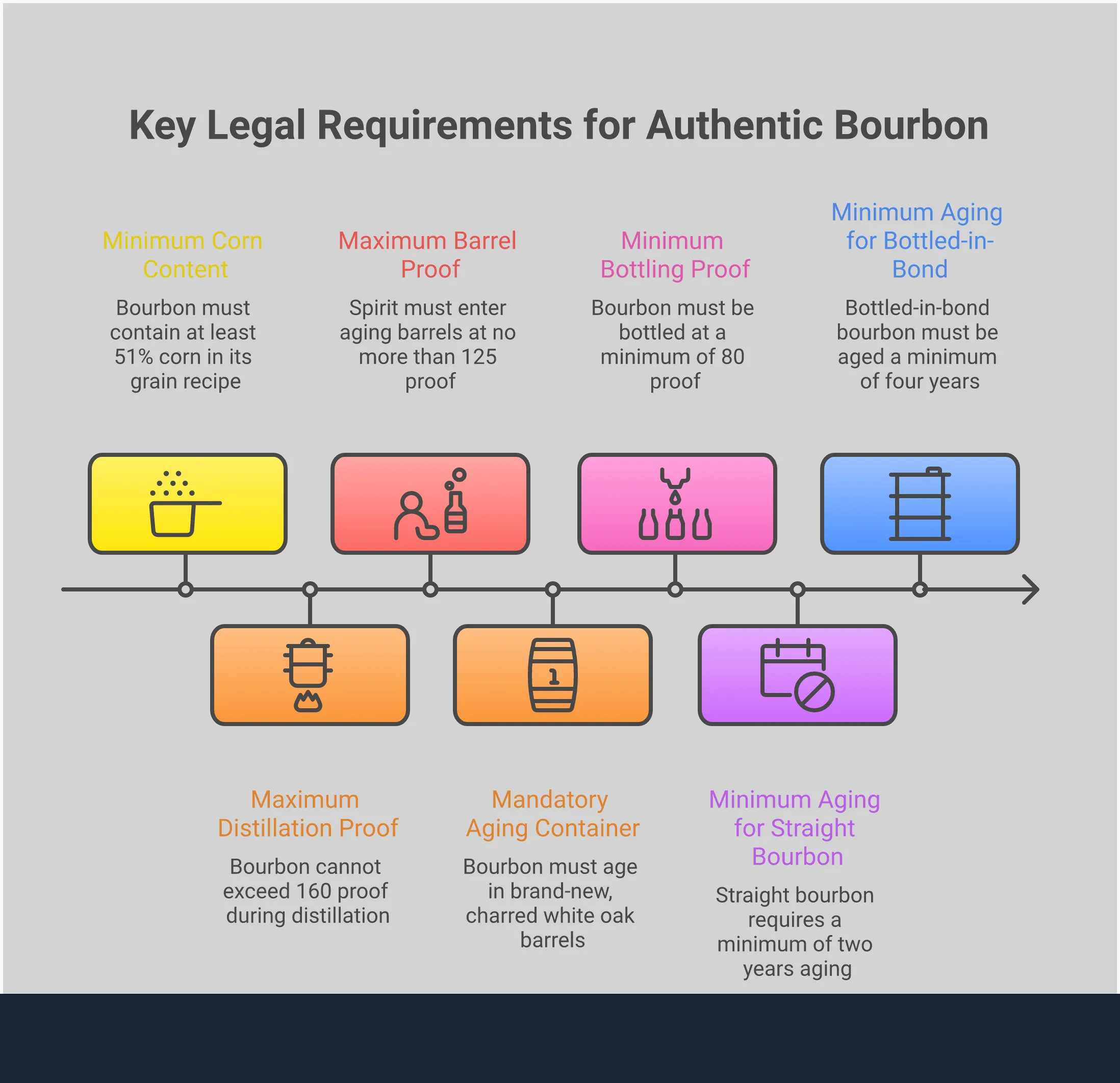
For a bottle to legally be labeled 'bourbon,' it has to play by a very specific set of rules. First, its grain recipe, or 'mash bill,' must contain at least 51% corn, which is what gives bourbon its characteristic sweetness. It must be aged in brand-new, charred oak barrels—a critical step that imparts notes of vanilla, caramel, and spice. There are also strict proofing requirements: it can't be distilled higher than 160 proof, enter the barrel for aging at more than 125 proof, and must be bottled at 80 proof or higher. Finally, nothing can be added but water; no extra colors or flavors are allowed.
The Strict Rules of Making Bourbon
Not just any whiskey can call itself a bourbon. To earn that title, a spirit has to follow a strict set of government regulations, often called the "rules of bourbon." These aren't just friendly guidelines; they are the law, and they're what give bourbon its uniquely American character and consistent quality. Think of them as the non-negotiable recipe that distillers have followed for generations to create the spirit we know and love.
From the specific grains used to the type of barrel it's aged in, every step is carefully defined. These rules ensure that when you pick up a bottle labeled "bourbon," you have a clear idea of what's inside. It’s this legal framework that separates bourbon from other types of whiskey and protects its heritage. Let's walk through exactly what those rules are and why they matter so much to the final flavor in your glass.
The Grain Recipe (Mash Bill)
It all starts with the grain. The foundational rule of bourbon is that its grain mixture, or "mash bill," must contain at least 51% corn. This high corn content is the primary reason for bourbon's signature sweetness, with notes of caramel, vanilla, and honey. While 51% is the minimum, most distillers use a much higher percentage, often between 60% and 80%. The remaining grains are typically a mix of rye, which adds a spicy character, and malted barley, which helps with fermentation. Some bourbons substitute wheat for rye, resulting in a softer, gentler flavor profile.
Distillation and Proofing Standards
After the mash is fermented, it's time for distillation, and there are strict numbers to follow. The spirit must be distilled to no more than 160 proof (80% alcohol by volume). Any higher, and it would strip away too many of the flavorful compounds from the grain. Next, it must enter the barrel for aging at no more than 125 proof (62.5% ABV). Finally, when it's ready to be bottled, it must be at least 80 proof (40% ABV). These specific proof points are essential for managing the flavor development during aging and ensuring a balanced final product.
The All-Important Barrel Requirement
This rule is one of the most important for creating bourbon's distinct flavor and deep amber color. Bourbon must be aged in new, charred oak containers. The "new" part is critical—a barrel can only be used once to age bourbon. Inside the barrel, a layer of char caramelizes the wood's natural sugars, which then dissolve into the aging spirit. This process imparts those classic notes of vanilla, caramel, and toffee, while also filtering out impurities. After their single use, these barrels are often sold to age other spirits like Scotch, rum, or tequila.
Made in the USA (and Nothing Extra)
While many people associate bourbon with Kentucky, the spirit can legally be made anywhere in the United States. As long as a distiller follows all the rules, they can label their product bourbon, whether they're in Texas, New York, or Colorado. The final rule is about purity: nothing can be added to bourbon at bottling except water. This is usually done to bring the spirit down to the desired proof. That means no added colors, flavors, or other additives are allowed. The rich color and complex taste you experience come entirely from the grain, the fermentation, and the time spent in that new, charred oak barrel.
How Bourbon Stands Apart from Other Whiskeys
All bourbon is whiskey, but not all whiskey is bourbon. This simple phrase is the key to understanding what makes bourbon special. While distillers around the world create incredible whisk(e)y, each style has its own set of rules, ingredients, and traditions that give it a unique identity. Think of it like comparing different types of bread—sourdough and brioche both start with flour and water, but the process and final result are completely different.
The strict regulations that define bourbon are what set it apart from its global counterparts like Scotch, Irish whiskey, and even its close American relative, rye. These differences aren't just for show; they create distinct flavor profiles that make each category worth exploring. Understanding what makes bourbon different will help you appreciate its signature sweetness and complexity, and it will make you a smarter shopper when you’re ready to pick out your next bottle. Let’s break down how bourbon compares to some of the other major players in the whiskey world.
Bourbon vs. Scotch
The most fundamental difference between bourbon and Scotch comes down to geography and grain. Simply put, bourbon must be made in the United States, while Scotch must be produced in Scotland. This geographic distinction comes with its own set of production rules. Bourbon’s mash bill is built on a foundation of at least 51% corn, which gives it a characteristic sweetness. Scotch, on the other hand, is typically made from malted barley. This grain, combined with factors like the use of peat for drying the barley, often gives Scotch a smoky, earthy, or malty flavor profile that is quite different from bourbon’s caramel and vanilla notes.
Bourbon vs. Irish Whiskey
When you think of Irish whiskey, the word "smooth" often comes to mind, and for good reason. Many Irish whiskeys are triple distilled, a process that creates a lighter, smoother, and more delicate spirit compared to bourbon, which is typically distilled twice. While bourbon has strict rules about its grain recipe and aging in new charred oak barrels, Irish whiskey regulations are a bit more flexible. It can be made from a variety of grains, and distillers have more options when it comes to the types of barrels used for aging. This results in a spirit that’s often less oak-forward and sweeter in a fruity, gentle way.
Bourbon vs. Rye
Bourbon and rye are close relatives in the American whiskey family, but they have a classic sweet-versus-spicy dynamic. The main difference lies in their primary grain. While bourbon must contain at least 51% corn, rye whiskey must be made from at least 51% rye. This simple switch in the mash bill creates a dramatic difference in taste. The corn in bourbon provides its signature sweetness, with notes of caramel, vanilla, and toffee. The rye grain, however, imparts a distinct peppery spice, with herbal and sometimes fruity notes. If you enjoy the rich sweetness of bourbon, trying a rye whiskey can be a fun way to explore a spicier side of American spirits.
Bourbon vs. Tennessee Whiskey
This is where things get interesting, as Tennessee whiskey is almost a bourbon. In fact, it meets all the legal requirements to be called bourbon. So, what’s the difference? It all comes down to one extra step: the Lincoln County Process. Before being put into barrels to age, Tennessee whiskey is slowly filtered through sugar maple charcoal. This additional step mellows the spirit, removing some of the harsher notes and imparting a subtle sweetness and smoothness that distinguishes it from its Kentucky cousins. While legally it could be called bourbon, distillers in Tennessee take pride in this unique process that defines their regional style.
What Can You Expect Bourbon to Taste Like?
If you’re just getting into bourbon, you’re in for a treat. Unlike some other spirits that can be sharp or intensely smoky, bourbon leans toward the richer, sweeter side of the spectrum. Its flavor is generally bold and full-bodied, with a warmth that feels incredibly inviting. This signature taste comes from its two most important ingredients: a corn-heavy grain recipe and brand-new, charred oak barrels. Together, they create a spirit that’s smooth, complex, and satisfying. Exploring the world of whiskey often starts with bourbon for this very reason—it’s approachable yet deeply flavorful.
Bourbon's Signature Flavor Profile
At its core, bourbon delivers a beautiful balance of sweet, spicy, and oaky notes. The sweetness, which comes directly from the corn, often presents itself as caramel, vanilla, or toffee. This isn't a sugary sweetness, but rather a deep, rich flavor that coats your palate. The spice notes, which can come from rye in the mash bill or the wood itself, often taste like cinnamon or nutmeg. Finally, the oak from the barrel provides a sturdy backbone, adding hints of toasted wood, leather, or even a touch of smoke. Every bourbon is different, but you can almost always count on finding this delightful trio of flavors working together.
Common Tasting Notes to Look For
When you take your first sip, try to see what specific flavors you can pick out. Beyond the big three (sweet, spice, and oak), you might find a whole range of other notes. Many bourbons have hints of dark fruit, like cherry, plum, or baked apple, which add a lovely layer of complexity. You might also taste brown sugar, maple syrup, or even a bit of chocolate. On the spicier side, look for black pepper or clove. Don't worry if you don't taste everything at once; part of the fun is training your palate to identify these subtle differences as you explore different bottles.
How Corn and Oak Create the Classic Taste
So, where do all these amazing flavors come from? It starts with the grain. By law, bourbon must be made from at least 51% corn, which provides that foundational sweetness. The other grains, like rye, wheat, or barley, add secondary flavors, such as spice or nuttiness. But the real transformation happens in the barrel. Bourbon must be aged in new, charred oak barrels, and this step is crucial. The charring process caramelizes the sugars in the wood, which then infuse the spirit with those classic notes of vanilla and caramel. The barrel also gives bourbon its beautiful amber color and contributes to its smooth finish, making each bottle a unique product of its time in the wood.
Decoding the Bourbon Label: Common Types
When you’re standing in front of a wall of whisk(e)y, the labels can feel like they’re written in a different language. But those terms aren’t just for show—they’re a roadmap to what’s inside the bottle, telling you about its age, production, and flavor profile. Understanding these key phrases is the best way to move from guessing to confidently choosing a bourbon you’ll genuinely enjoy. Let’s break down some of the most common types you’ll see on a label so you know exactly what you’re buying.
Straight and Bottled-in-Bond
If a bourbon is labeled "straight," it means it has been aged for at least two years in new charred oak barrels and contains no added colors, flavors, or other spirits. It’s a fundamental mark of quality. A step above that is "Bottled-in-Bond." This term comes from the Bottled-in-Bond Act of 1897, which was America’s first consumer protection law. To earn this designation, the bourbon must be the product of one distillery from a single distillation season, aged for at least four years in a federally bonded warehouse, and bottled at exactly 100 proof (50% ABV). It’s a historic guarantee of authenticity and quality.
Wheated vs. High-Rye
After corn, the second most prominent grain in the mash bill has a huge impact on the bourbon’s final taste. A "wheated" bourbon swaps out the traditional rye for wheat, resulting in a softer, smoother, and often slightly sweeter profile with notes of honey, caramel, and bread. On the other side of the spectrum is "high-rye" bourbon, which uses a larger portion of rye grain. This gives the spirit a spicier, drier, and more robust character, often with flavors of black pepper, cinnamon, and mint. Trying one of each is a fantastic way to discover which style you prefer.
Single Barrel and Small Batch
These terms refer to how the bourbon is bottled. A "Single Barrel" bourbon is exactly what it sounds like: all the liquid in the bottle comes from one individual barrel. Because no two oak barrels are identical, each single barrel release offers a unique, one-of-a-kind flavor profile that can never be perfectly replicated. "Small Batch" means the bourbon is a blend of a select number of barrels, mixed together to create a specific and consistent taste. While there’s no legal definition for "small," distillers use this process to hand-select barrels that perfectly complement each other, creating a balanced and reliable final product. Many unique single barrel expressions can be found in collections of rare spirits.
Four Grain and Cask Finishes
Some distillers get creative with both the beginning and end of the bourbon-making process. A "four grain" bourbon includes corn, rye, wheat, and malted barley in its mash bill. Using all four major grains can create a deeply complex spirit with layers of flavor that touch on sweet, spicy, and soft notes all at once. You may also see bourbons with "cask finishes." This means that after its initial aging in new charred oak, the bourbon is moved into a second barrel that previously held another spirit or wine, like Port, Sherry, or rum. This finishing period adds another dimension of flavor, imparting subtle notes from whatever the barrel held before.
How Bourbon Is Made, Step by Step
The journey from a handful of grains to the rich, amber liquid in your glass is a fascinating one, guided by a strict set of rules but perfected by the distiller's art. While every bourbon brand has its own unique recipe and process, they all follow the same fundamental steps to create America’s native spirit. It’s a craft that balances science, tradition, and a whole lot of patience.
Think of it like a time-honored recipe passed down through generations. You start with quality ingredients, carefully cook and prepare them, and then let time work its magic. The process begins with selecting a specific blend of grains, which are then cooked and fermented to create a simple alcoholic liquid. From there, distillation concentrates the alcohol and flavor before the spirit is laid to rest in a barrel. This final step, aging, is where bourbon develops its signature color and complex character. Let’s walk through each stage of how this iconic American whiskey is made.
Step 1: Mashing and Fermenting the Grains
Everything starts with the grain recipe, known as the "mash bill." By law, a bourbon's mash bill must contain at least 51% corn, which gives the spirit its characteristic sweetness. Most distillers use a higher percentage, often around 70%, and fill out the rest with "flavoring grains" like rye (for spice), wheat (for a softer, gentler profile), and malted barley (for its enzymes that help with fermentation).
The grains are ground and cooked with water to create a thick, porridge-like mixture called "mash." This process releases the starches from the grains. After the mash cools, yeast is added to begin fermentation. Over the next few days, the yeast eats the sugars in the mash, converting them into alcohol and creating a liquid known as "distiller's beer" or "wash."
Step 2: Distilling the Spirit
Once fermentation is complete, the distiller's beer is moved into a still to separate the alcohol from the water and other impurities. The liquid is heated, and because alcohol has a lower boiling point than water, it turns into vapor first. This vapor rises, cools, and condenses back into a more concentrated liquid.
This process is usually done twice, first in a large column still and then in a smaller copper pot still, to refine the spirit. The law dictates that bourbon cannot be distilled to a proof higher than 160 (80% alcohol by volume). This ensures that the flavors from the grain aren't stripped away. The resulting clear, un-aged spirit is called "white dog," and it’s what goes into the barrel for aging.
Step 3: Aging in New Charred Oak
This is where the real transformation happens. The "white dog" is put into brand-new, charred white oak barrels to mature. The "char" is a layer of burnt wood on the inside of the barrel, which acts as a natural filter and releases delicious wood sugars. As the seasons change, the barrel's wood expands and contracts, causing the spirit to move in and out of the charred oak.
This interaction gives bourbon 100% of its color and much of its flavor. The wood imparts notes of vanilla, caramel, and spice while smoothing out the harsh edges of the young spirit. While there's no minimum aging requirement for bourbon, most are aged for at least two years. Many of the most sought-after rare bottles spend a decade or more in the barrel, developing incredible depth and complexity.
Why Is Kentucky Bourbon So Famous?
When you think of bourbon, you almost certainly think of Kentucky. The two are practically synonymous, and for good reason. While bourbon can legally be made anywhere in the United States, an incredible 95% of the world's supply comes from the Bluegrass State. This deep connection isn't just a coincidence; it's a story woven from history, geography, and a little bit of science.
Kentucky's identity is so intertwined with this iconic American spirit that it has become the undisputed heartland of production. The state’s long-standing traditions, passed down through generations of distillers, have perfected the craft and set the standard for what great bourbon should be. From the rolling hills to the historic rickhouses, Kentucky provides the perfect backdrop and resources for creating the rich, complex spirit enjoyed worldwide.
Kentucky's Place in Bourbon History
Kentucky’s role as the epicenter of bourbon production is a legacy built over centuries. The state’s deep roots in distilling date back to the late 18th century, when settlers began turning their surplus corn into whiskey. This long history has given Kentucky distillers an unmatched level of expertise and a rich heritage that defines the industry.
While the law states that bourbon can be produced anywhere in the U.S., its identity is undeniably linked to the American South, and specifically to Kentucky. This historical dominance means the state’s distilleries have had generations to refine their techniques, from crafting unique mash bills to mastering the art of aging. This tradition is why the most iconic names in bourbon whiskey call Kentucky home.
The Impact of Climate and Limestone Water
Kentucky’s natural resources give it a unique advantage in making bourbon. The secret starts with the water, which flows through a massive bed of limestone. This natural filtration process removes iron—an element that can spoil whiskey’s taste and color—while adding calcium and magnesium, which are great for the fermentation process. It’s often said that this pure, mineral-rich water is the soul of Kentucky bourbon.
The weather also plays a huge part. Kentucky experiences dramatic temperature swings throughout the year, with hot summers and cold winters. These fluctuations cause the wooden barrels to expand and contract, forcing the aging whiskey deeper into the charred oak and then pulling it back out. This "breathing" process is what imparts the classic notes of vanilla, caramel, and spice, and gives bourbon its signature amber color.
Bourbon Beyond the Bluegrass State
It’s a common misconception that bourbon has to be made in Kentucky. The legal requirement is simply that it must be made in the United States. While Kentucky is the historic and dominant producer, fantastic bourbons are now being crafted in states from Texas to New York. These distilleries are bringing their own local grains and unique climates to the process, creating exciting new flavor profiles.
However, Kentucky's long-standing reputation and sheer volume of production have solidified its status as the premier location for this classic American spirit. The state's distillers have a deep, institutional knowledge that is hard to replicate. So, while you can find excellent bourbon from all over the country, the heart of the industry will likely always beat strongest in the Bluegrass State.
How to Pick Your Perfect Bourbon
Walking into a liquor store or browsing an online spirits collection can feel a bit overwhelming with all the bourbon choices available. With so many different bottles, proofs, and price points, how do you know where to start? The good news is that finding a bourbon you’ll love is easier than you think. It’s not about knowing every single detail, but about understanding a few key things that can guide you to the right bottle for your palate and your wallet.
Think of it as a fun experiment. By learning how to read a label and understanding what affects the flavor in the bottle, you can confidently pick a bourbon for any occasion, whether you’re mixing a classic cocktail or sipping it neat. We’ll walk through a few simple tips to help you find your new favorite.
Understanding Proof and Flavor Intensity
One of the first things you’ll notice on a bourbon label is the proof. Simply put, the proof is just double the alcohol by volume (ABV). So, a bourbon that is 90-proof is 45% ABV. By law, bourbon must be bottled at a minimum of 80 proof, but it can go much higher. This number is more than just a measure of strength; it’s a major indicator of flavor intensity. A higher proof often means the flavors are more concentrated and bold, while lower-proof bourbons tend to be smoother and more delicate, making them a great starting point if you’re new to the whisk(e)y world.
What to Look for on the Label
The label on a bourbon bottle is your roadmap to what’s inside. Look for the term “straight bourbon.” This is a mark of quality, indicating the whiskey has been aged for at least two years and contains no added colors or flavors. If a straight bourbon is aged for less than four years, the distiller must include an age statement on the label. This tells you exactly how long it spent in the barrel, which gives you a clue about its maturity and complexity. You might also see terms like “single barrel,” meaning every bottle came from one specific cask, or “small batch,” which is a blend of a select number of barrels.
Finding a Great Bottle on Any Budget
You don’t have to spend a fortune to enjoy a fantastic bottle of bourbon. There are incredible options at every price point, from reliable daily sippers to rare and hard to find bottles for special occasions. Most bourbons share a signature flavor profile that’s rich and slightly sweet, with notes of vanilla, caramel, oak, and spice. Many of the most popular and well-loved bourbons are aged between five and twelve years and are surprisingly affordable. A great strategy is to start with a classic, well-regarded bottle from our collection of gifts under $100 to get a feel for the quintessential bourbon taste before exploring more unique expressions.
Related Articles
Frequently Asked Questions
Does bourbon have to be made in Kentucky? This is one of the most common myths about bourbon, but the answer is no. While about 95% of all bourbon is produced in Kentucky, the only legal geographical requirement is that it must be made in the United States. The reason Kentucky is so famous for it comes down to history and ideal conditions, like its limestone-filtered water and climate, which are perfect for aging whiskey. You can find fantastic bourbons from distillers all across the country.
Is older bourbon always better? Not necessarily. While age can add depth and complexity, it isn't a simple guarantee of quality. As bourbon spends more time in the barrel, it pulls more flavor from the wood, which can lead to rich notes of oak, leather, and spice. However, if left for too long, a bourbon can become overly woody or tannic. The "sweet spot" for aging is often between five and twelve years, but ultimately, the best bourbon is the one that tastes best to you.
What's the best way to drink bourbon? The best way is however you enjoy it most, but a great place to start is by tasting it neat in a glass. This allows you to experience the spirit's true aroma and flavor profile without any dilution. After your first sip, try adding a single drop of water or a small ice cube. This can open up the bourbon, softening the alcohol and revealing more subtle flavors. Of course, bourbon is also the backbone of classic cocktails like the Old Fashioned or Whiskey Sour.
What's the difference between a "wheated" and a "high-rye" bourbon? This all comes down to the grain recipe used to make the bourbon. After the required 51% corn, distillers use other "flavoring" grains. A "wheated" bourbon uses wheat, which results in a softer, smoother, and often sweeter profile with gentle notes of honey and caramel. A "high-rye" bourbon uses a larger amount of rye, which creates a spicier and bolder spirit with distinct notes of black pepper, cinnamon, and mint.
Why does bourbon have to be aged in new, charred oak barrels? This rule is the secret to bourbon's signature flavor and color. The charring process caramelizes the natural sugars in the wood, and as the spirit ages, it soaks up those delicious compounds. This interaction is what gives bourbon its deep amber hue and its classic notes of vanilla, caramel, and toffee. Using a barrel more than once would result in a much less flavorful spirit, so the "new" barrel requirement ensures every bottle of bourbon has that rich, distinctive character.